One Jump at a Time: Finding the Rhythm in Geometry Dash
Introduction
Some games invite you to settle in, explore a big world, and take your time. Geometry Dash does the opposite. It gives you a small, bright shape, a path full of obstacles, and a simple instruction: keep moving, and jump at the right moment. The idea is easy to understand, but the challenge can be surprisingly absorbing. A short level may ask for only a few minutes of your attention, yet it can take many attempts to cross the finish line.
That mix of simplicity and difficulty is part of the appeal. You do not need a long tutorial to start playing, and each attempt gives you another chance to learn. If you are curious about the game, you can explore Geometry Dash and see how its colorful levels turn timing into a playful test of focus.
Gameplay
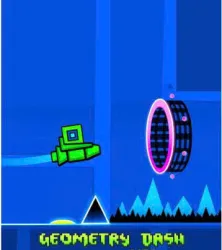
In a typical level, your character travels forward automatically. You guide its movement by tapping, clicking, or pressing a key to jump. The path is filled with hazards such as spikes, gaps, and blocks. Touching an obstacle sends you back to the beginning of the level, so success depends on recognizing what is coming and responding at just the right time.
That sounds straightforward, but the game quickly adds variety. Some sections change the way your character moves, while others alter its size, direction, or gravity. A jump that works in one part of a level may be too early or too late in the next. The visual style helps make the action lively: bright colors, geometric shapes, and changing backgrounds give each section its own character.
Music plays an important role, too. Obstacles often seem to follow the beat, so listening can help you anticipate when to jump. You are not simply reacting to pictures on the screen; you are learning the rhythm of the level. After several attempts, a sequence that once felt chaotic may begin to sound and look familiar. A beat, a flash, and a jump can start to feel like parts of the same pattern.
The game can be played in short bursts, which makes it easy to fit into a break. Yet it also rewards patience. Reaching a difficult section is satisfying because you know exactly how much practice it took to get there. Even when an attempt ends quickly, it can still teach you something: perhaps a jump needs a lighter touch, or a hazard appears sooner than expected.
Tips for a More Enjoyable Run
Start by learning the controls. Before worrying about a perfect run, get comfortable with the basic jump. Notice how your chosen input feels and how quickly the character responds. A steady, familiar control makes it easier to focus on the level itself.
Watch ahead, not only at your character. It is tempting to stare at the moving shape, especially when obstacles are close. Try to keep your attention on the path just in front of it. Spotting the next gap or spike early gives you more time to prepare.
Use the music as a guide. The soundtrack can help you find a level’s rhythm. Listen for repeated beats and changes in the melody, then notice how they relate to the obstacles. Treat the music as a helpful clue rather than a guarantee: some moments may still need careful visual timing.
Practice small sections when possible. If a practice option is available, use it to become familiar with tricky passages. Breaking a difficult level into smaller pieces can make it feel manageable. Learn one section, then work on connecting it to the next. This is often less frustrating than trying to memorize everything in a single run.
Pay attention to why an attempt failed. A restart can feel discouraging if it seems like nothing changed. Instead, ask yourself one simple question: was the jump early, late, or unnecessary? Making a small adjustment on the next attempt turns failure into useful feedback.
Take a pause when concentration fades. Repeating the same level can be fun, but tired hands and impatience make precise timing harder. Step away for a moment, stretch, or choose another activity. Returning with a clear head can make a familiar section feel easier.
Most of all, set your own pace. Some players enjoy chasing a clean run; others are happy to make a little progress and move on. There is no need to treat every difficult level as a test of skill or persistence. The best experience is the one that stays enjoyable.
Conclusion
Geometry Dash builds a lively challenge from a few simple ingredients: automatic movement, well-timed jumps, colorful obstacles, and music that gives each level a pulse. Its difficulty can be demanding, but the steady cycle of trying, learning, and trying again makes progress feel tangible. You begin to recognize patterns, trust your timing, and appreciate the small victories along the way.
Whether you play for a few minutes or settle in to master a particularly tricky level, the main idea remains simple: pay attention, find the rhythm, and take it one jump at a time.